Small Influencers: How Brands Find and Choose Creators
Find small influencers for your brand. Compare audience fit, recent reach, engagement quality and campaign costs before choosing nano or micro-creators.

Quick answers
Influencer affiliate marketing pays a creator when a tracked referral leads to a qualifying sale or other agreed action. A brand defines the commission, attribution rules and payment conditions. Joining a program does not automatically mean the creator has agreed to specific posts or advertising rights.
Set a commission your product economics can support and the creator can evaluate. Define the eligible sale amount, discounts, refunds, fees and any separate content payment before choosing a rate. The percentage in this guide is a hypothetical example, not a standard or recommended industry rate.
The program's agreed terms and tracking system determine the adjustment. In this guide's example, commission is calculated on eligible merchandise revenue after refunds. Shopify Collabs has its own holding and cancellation rules; do not assume those vendor rules apply to every affiliate program or partial refund.
For US-facing endorsements, make the financial relationship clear where readers encounter the recommendation. An understandable commission disclosure helps explain why the link is commercial. FTC guidance covers placement and video disclosures; a profile notice or a platform label alone may not make the relationship clear.
Use Mysocial for relevant creator research and saved relationship context. Discovery access and the available allowance govern external research. Keep affiliate attribution, order reconciliation, commission approval and payouts in your store or chosen affiliate system; agree the terms directly with each creator before the pilot starts.
Influencer affiliate marketing is an arrangement where a creator earns commission when their tracked referral produces an agreed result, such as an eligible sale. For a brand, the useful starting point is a written offer: which purchases count, what the creator earns, how refunds change that amount, and when it becomes payable.
Shopify’s influencer affiliate program guide explains the referral model and distinguishes it from paying a fixed fee for defined content. This guide focuses on a small, opt-in sales commission pilot for brands and agencies.
Start with the program-terms worksheet, check the refund-adjusted example, then use the creator research prompt to prepare a shortlist. The worksheet and figures are original planning examples; they are not a signed agreement or a promise of results.
Commission can be the whole offer or one part of it. Write down the distinction before discussing a posting schedule.
| Arrangement | What the creator receives | What to agree separately |
|---|---|---|
| Commission-only participation | Payment for qualifying referrals under the program rules | Whether any content is required, and on what terms |
| Fixed content fee plus commission | An agreed fee for specified work, plus qualifying referral earnings | Deliverables, revisions, timing and which sales earn commission |
| Gift plus commission | An optional product sample and qualifying referral earnings | Whether receiving the sample carries a posting requirement |
Do not describe a commission-only invitation as guaranteed paid content. If your launch needs a specific video by a specific date, negotiate that deliverable and its compensation. A creator can reasonably prefer a fixed fee, a hybrid arrangement or no participation.
For a product sample with no publishing obligation, use the separate influencer gifting campaign method. For defined content work, record the scope in a brand partnership proposal. Neither a gift nor an affiliate link gives the brand automatic permission to reuse the creator’s content in ads.
Copy these fields into your own program document. Complete them with the team that owns your store, order data and payments, then give the creator the full terms to review.
| Field | Decision to write down |
|---|---|
| Eligible offer | Products, territories, currencies and customers included; exclusions such as existing customers if applicable |
| Qualifying action | What earns commission: an eligible completed purchase, for example, rather than a click |
| Commission basis | Whether the rate applies to merchandise after discounts; treatment of tax, shipping and other charges |
| Rate or amount | Percentage or fixed payment, currency, and any product-specific exceptions |
| Attribution | Link/code system, credit window, and how competing referrals or a code plus a link are resolved |
| Returns and cancellations | How full and partial refunds change commission; who investigates disputed orders |
| Approval and payment | Review/hold period, payment schedule, minimum threshold if any, payment method and required setup |
| Content expectations | Optional participation or separately agreed posts, dates, review steps and fees |
| Claims and disclosure | Accurate product information and how the commercial relationship will be disclosed |
| Permitted promotion | Allowed channels and any agreed restrictions on paid search, coupon sites or code sharing |
| Content rights | Any licensed uses, editing, duration and additional compensation, agreed explicitly |
| Support and changes | A named contact, how questions are handled, and what happens when terms or participation end |
The worksheet’s purpose is to expose missing decisions. Avoid a vague promise such as “earn commission on every sale” when your system excludes some orders. If a setting cannot implement the offer, change the setting or the offer before a creator joins.
For example, “12% on eligible merchandise revenue after discounts and refunds, excluding tax and shipping” defines a basis. It still needs an attribution window, approval rules and payment timing. The 12% is an illustrative choice, not a market benchmark.
Hypothetical example: a desk-accessories brand agrees to pay one creator 12% of eligible merchandise revenue after refunds. Tax and shipping are excluded. Each amount below is already after any customer discount, and the orders have met the pilot’s attribution rules.
| Item | Example calculation | Amount |
|---|---|---|
| Initial eligible merchandise revenue | 25 attributed orders × $80 | $2,000 |
| Full refunds | Two orders × $80 | −$160 |
| Partial refund | One different order | −$20 |
| Approved commission basis | $2,000 − $160 − $20 | $1,820 |
| Creator commission | $1,820 × 12% | $218.40 |
The reusable calculation for this stated basis is:
Approved commission = (eligible merchandise revenue − eligible refunded merchandise revenue) × agreed rate.
Applying the rate before refunds would produce $240. The $21.60 difference matters when you reconcile the approved amount. Preserve the order-level adjustments so the creator can understand the statement; a different basis or fixed bounty needs a different calculation.
This $218.40 is the creator’s example commission, not the brand’s profit or the total cost of the pilot. Add any content fee, sample cost, fulfilment, affiliate software, processing fees and staff time when assessing the program. Attributed revenue alone also cannot tell you how many purchases would have happened without the creator’s recommendation.
Shopify Collabs’ payment documentation, checked October 7, 2026, says commissions first enter a holding period. Canceled and fully refunded orders have their commission canceled during that period. Its default hold is 30 days, configurable from 1–90 days; payout then depends on the billing and creator payout setup.
Those are Shopify Collabs rules, not universal affiliate terms. The partial-refund adjustment above is our hypothetical agreed basis, not a claim that Collabs automatically performs that exact adjustment. Confirm your provider’s actual behaviour for partial refunds, late refunds, disputes and fees. Keep “tracked,” “pending,” “approved” and “paid” as distinct states in your records.
Choose a batch your team can evaluate, support and reconcile. Five candidates is a manageable example for the process below, not a statistically proven pilot size or a recruitment target.
For each candidate, inspect published work about the problem your product addresses. Record a source post, what makes the product fit, and what is still unknown. For desk accessories, useful evidence might be a creator’s practical small-office setup tutorial. A large follower count without relevant work is insufficient evidence of product fit.
Confirm audience geography, willingness, product experience and commercial expectations with the creator. A search region is not verified audience location. Compare content performance within its platform; a YouTube view and a TikTok view are not interchangeable evidence of purchase intent.
Mysocial’s Influencer Discovery searches topic-relevant content and identifies the creators behind it. Results can include source posts and available profile/performance data. Connect your assistant to Mysocial MCP before trying the prompt below; external research requires the applicable discovery access and available search/enrichment allowance.
Replace the example topic with your product’s use case. If Copy is unavailable, select the visible prompt and copy it manually. The Run buttons open your chosen AI app. Connect and select Mysocial there before using the prompt; copy and paste if needed.
Save the prospects you choose, not every search result. Mysocial’s relationship management keeps saved identities, research notes, stages and next actions together. It helps your team continue the conversation with context. Use your store or affiliate system for conversion attribution, commission calculation and payment reconciliation.
Send a concise invitation through the creator’s published business route. Explain why their work fits, identify the commission-only or hybrid offer, and provide the terms before asking them to agree. The influencer outreach guide covers initial email/DM structure and respectful follow-ups.
An invitation should make these facts easy to find:
Allow questions and negotiation. Do not activate someone as a participating affiliate because they appeared in a search, received a product or clicked a document. Record the terms they actually accepted and the date; keep a version so later changes do not obscure the agreement.
For US-facing endorsements, FTC guidance says financial and free-product relationships should be disclosed where people encounter the endorsement. A notice buried in a profile is easy to miss. For video, put the disclosure in the video; the description alone is insufficient, and both audible and visible disclosure can improve notice.
An original plain-language affiliate example is: “I earn a commission if you buy through this link.” Place the explanation with the recommendation. Add any other relationship, such as a gifted sample, when relevant. The disclosure does not excuse an unsupported product claim or a fabricated experience. Agree truthful claims and disclosure placement before publication, while preserving the creator’s honest opinion.
Set a review date that allows for your actual attribution and returns periods. A content publication date, an affiliate credit window and a payment hold are different clocks.
| Record | What to reconcile |
|---|---|
| Participation | Creators who accepted the written offer, with the terms version |
| Content | Posts actually published and their source links; keep unfulfilled contracted work separate |
| Traffic | Link/code activity from the chosen tracking system; investigate missing or conflicting credit |
| Orders | Qualifying attributed orders, discounts, cancellations and refunds |
| Commission | Pending, approved, disputed and paid amounts, with order-level reasons |
| Economics | Net revenue, product/fulfilment cost and all program expenses |
| Learning | Creator feedback, support issues and the change to test in the next batch |
UTM labels can help analyze visits, but they do not define who is owed commission. The influencer UTM tracking guide covers consistent campaign links; your affiliate system and agreed attribution rules must resolve payable sales.
Expand when the reconciled evidence and operational capacity justify another batch. If tracking is unreliable, terms are disputed or creators cannot judge the offer, repair those issues first. Keep the next test specific: a revised commission basis, clearer product information or a better-fit topic group. A growing creator list by itself is not evidence that the program works.
For brands and agencies
Research creators through the topics they publish about. Review the source posts, then save your chosen prospects and fit notes in Partnerships.
Your assistant needs a Mysocial connection. External research requires discovery access and available allowance.
Influencer Marketing Strategy
Related Posts
Find small influencers for your brand. Compare audience fit, recent reach, engagement quality and campaign costs before choosing nano or micro-creators.
Create a clear brand partnership proposal with deliverables, pricing, dates and evidence. Copy the template or build and download a draft for free.
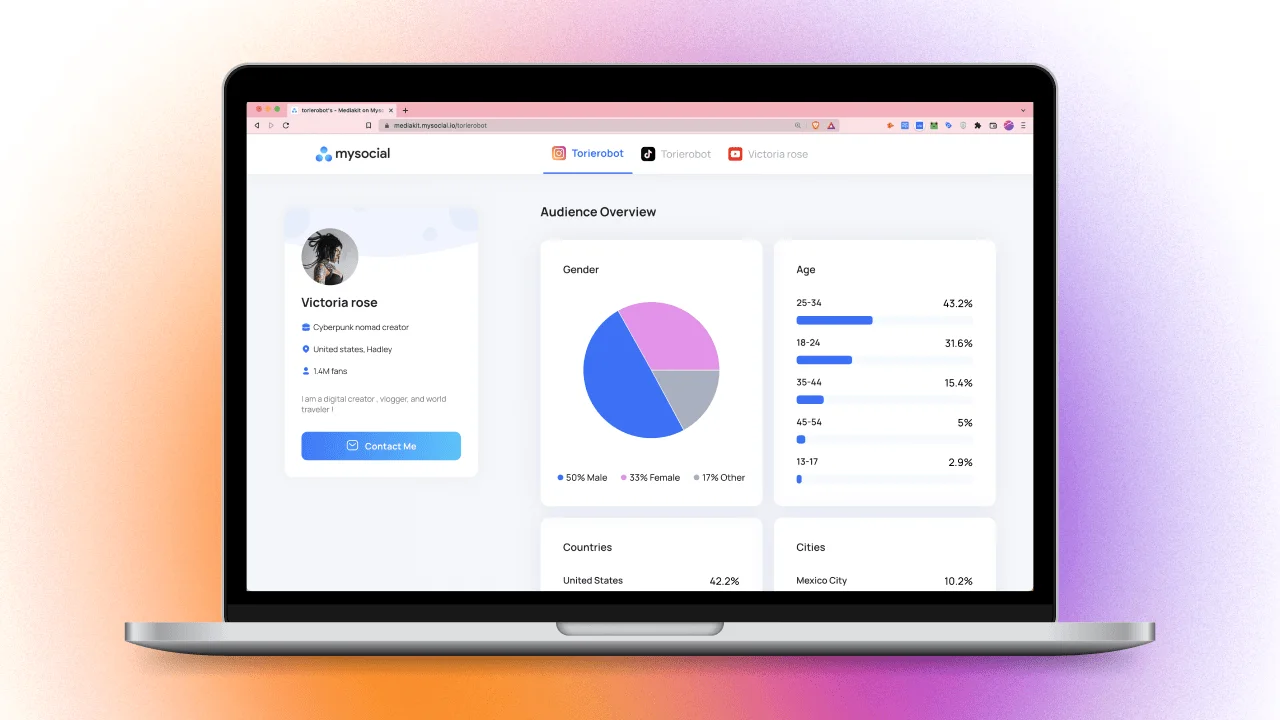
Build a media kit that wins brand deals. 7 essential sections, metrics to include, rate card tips, and how to stand out from competitors.