Best YouTube Sponsorship Platforms for Creators
Compare YouTube sponsorship platforms for finding brands and getting booked. See costs, eligibility and the best fit for your channel.

Quick answers
Research brands that fit your videos, inspect their recent creator collaborations and check a relevant contact route. Prepare a media kit with actual channel evidence, pitch a specific video idea and agree the fee, deliverables and usage terms. A research match is a prospect, not a confirmed deal.
Subscriber count alone does not establish whether a brand will sponsor you. Check its campaign criteria and show relevant audience and video evidence. YouTube Creator Partnerships has its own eligibility rules, which are separate from approaching a brand directly.
SponsorRadar and MeetSponsors offer YouTube sponsor research; Sponsorship.so provides searchable sponsorship data. Eligible creators can also explore YouTube Creator Partnerships. Compare the evidence, available contacts, plan limits and your own outreach responsibilities before choosing.
Negotiate the actual scope: format, production, revisions, timing, exclusivity and reuse permissions. Subscriber tiers do not give every creator a reliable rate. If you use a CPM model, state the agreed view basis and assumptions; an estimate is not guaranteed revenue or brand ROI.
A flat-fee sponsorship pays an agreed amount for defined work. An affiliate offer usually pays commission on qualifying tracked sales or actions, subject to its terms. A deal may combine both. A free product alone is a different offer, so confirm compensation before accepting.
To get sponsors on YouTube, identify brands that fit your videos, inspect their recent creator collaborations and pitch a specific idea with real channel evidence. You can research manually, use sponsorship platforms or explore YouTube Creator Partnerships if eligible. Check the contact route, then agree compensation, deliverables and usage terms before starting. A brand appearing in a database is a prospect, not a promise to sponsor you.
Start with the sponsor research routes, the platform comparison or the pitch template. A small channel needs a credible fit and workable proposal; this guide does not promise a deal at a particular subscriber count.
Choose creators whose topics, formats and audiences overlap with yours. Inspect recent integrations and the linked brand, rather than collecting every company mentioned in a video. Record the video URL, publication date and what the brand was promoting.
That record is a lead to investigate. A product mention might be unpaid, affiliate-supported or part of an older campaign. Even a clear paid integration does not tell you today’s budget, who approved it or whether the brand wants another creator. Confirm the arrangement where evidence is available; mark the rest unknown.
Look for a reason your own work could help. A desk-setup tutorial and a workspace product can share a useful context, but that does not establish audience overlap by itself. Explain the connection using your actual content and available audience data.
Review products you already use or can evaluate properly. Note a genuine use case, a relevant video and a possible collaboration idea. Avoid offering a positive endorsement before trying something or checking claims you would be asked to make.
Use the brand’s official partnership route when one is published. A relevant marketing or creator-partnerships role may also be a starting point. A general contact form can help route the inquiry; it is not automatically useless. YouTube’s brand-deal guidance lists website contact forms and relevant LinkedIn contacts among the ways creators can approach brands.
Keep your business contact information current and give interested brands a clear explanation of your topic and work. A public media kit or a simple sponsorship page can show your recent videos, the audience evidence you hold and how to discuss a brief.
Check an inbound offer against the brand’s official website and available contact information. A familiar logo or company name does not establish the sender’s identity. Ask what they want you to deliver, how payment works and which permissions they need before committing.
These routes solve different parts of the job. The vendor descriptions below were checked on their own websites on October 7, 2026. They describe advertised capabilities, not an independent test of data accuracy or results.
| Route | Useful starting point | What to verify before relying on it |
|---|---|---|
| SponsorRadar | YouTube sponsorship history and brands associated with similar channels | Which research and contact features your plan includes; inspect the underlying videos and the age of each record |
| MeetSponsors | Channel-based sponsor recommendations, sponsorship history and pitch preparation | Available outreach/contact limits. Its site says you approach and negotiate with brands yourself; it is not a deal marketplace |
| Sponsorship.so | Searchable YouTube sponsorship data, competitor tracking and alerts | Subscription and credit requirements. Its public homepage is also aimed at brands finding creators, so confirm the creator workflow you need |
| YouTube Creator Partnerships | A Studio route for eligible creators to manage brand inquiries | Current country, age, Partner Program and policy eligibility. An inquiry still requires negotiation and agreement with the brand |
| Mysocial Partnerships | Research relevant companies and available contact routes with a connected assistant; keep selected prospects and notes together | Paid research access and available allowance. Brand fit, current budget and contact availability still need review; sending is your action |
For example, start with a sponsorship-history tool when you need evidence of a brand’s existing YouTube activity. Use a company-research workflow when you already know the product category but need to identify relevant organizations and people. Check your YouTube Studio options when you are eligible for its own program. None of these routes replaces deciding whether the proposed content is right for your viewers.
Review the current plan page before signing up: search access, contact lookups, exports and billing periods can differ. A subscription price is the cost of a research tool, not a sponsorship fee you will receive. We do not supply a universal commission percentage or promise that paying for a tool produces a reply.
Build a short media kit around information you can substantiate. YouTube recommends a media kit with channel and audience context, relevant performance figures and collaboration ideas. Use your own Studio data for metrics available there; show the measurement dates and avoid presenting estimates as observed outcomes.
A practical packet can include:
For the structure, use the YouTube media kit guide. A kit helps explain your work; it does not certify future sales, audience fit or a sponsorship rate. Subscriber count can provide context, but it is not a substitute for the proposed video’s evidence and scope.
Before discussing a number, distinguish the commercial arrangements:
| Offer | How compensation works | Questions to resolve |
|---|---|---|
| Flat-fee sponsorship | An agreed fee for defined deliverables | Format, revisions, publication timing, payment schedule, cancellation and included permissions |
| Affiliate arrangement | Commission on qualifying tracked sales or actions | Commission basis, attribution window, exclusions, returns, payment threshold and reporting access |
| Hybrid | A fee plus a commission component | Record both parts separately; do not treat estimated commission as guaranteed pay |
| Gift or product exchange | Product supplied, with or without an agreed content obligation | Is posting voluntary, or has a deliverable been agreed? Does the offer include any cash payment or reuse permission? |
Price the work you are actually agreeing to do. Separate creation and posting from extra revisions, exclusivity, brand reuse and paid advertising permissions when the quote treats them separately. Do not assume one format always pays a fixed multiple of another.
A CPM model can be a negotiation aid when both parties understand the view basis. The arithmetic is chosen views ÷ 1,000 × agreed CPM; the CPM and the views are assumptions or contract terms, not values this guide can infer from your subscriber count.
Hypothetical arithmetic only: 20,000 planned views at a chosen USD 25 CPM gives USD 500. This is not a recommended market rate or a promise that the video will reach 20,000 views. Specify the measurement window, whether the fee is fixed or adjusted, and what happens if views differ. It also leaves production, permissions and other separately agreed costs to resolve. The YouTube pricing guide discusses that pricing job in more detail.
A useful first message makes the fit and next step easy to understand. Use this original template after checking the company and route; replace every bracket with evidence you hold.
Hi [Name/team],

I make YouTube videos about [specific topic] for [audience you can substantiate]. Your [product] could fit a video about [specific use case], because [concrete reason].

Here is a relevant example of my work: [video URL]. My media kit includes [actual metric and measurement period]: [kit URL].

I'd like to discuss [proposed format and scope] for [timing]. Are you the right person for creator partnerships, and is there a brief or budget we should work from?

Thanks,
[Name]
If the conversation already includes a brief, answer its actual requirements instead of sending a generic introduction. State your proposed fee once the scope is clear, including what is and is not included. Avoid claiming an audience demographic, past sponsor or conversion result just because it would improve the pitch.
When the discussion becomes concrete, use a brand partnership proposal to record the scope and terms you are offering. A personalized message still may receive no response. Keep a record of the contact date and reply, follow the recipient’s stated preferences, and stop if they decline rather than treating silence as an agreed collaboration.
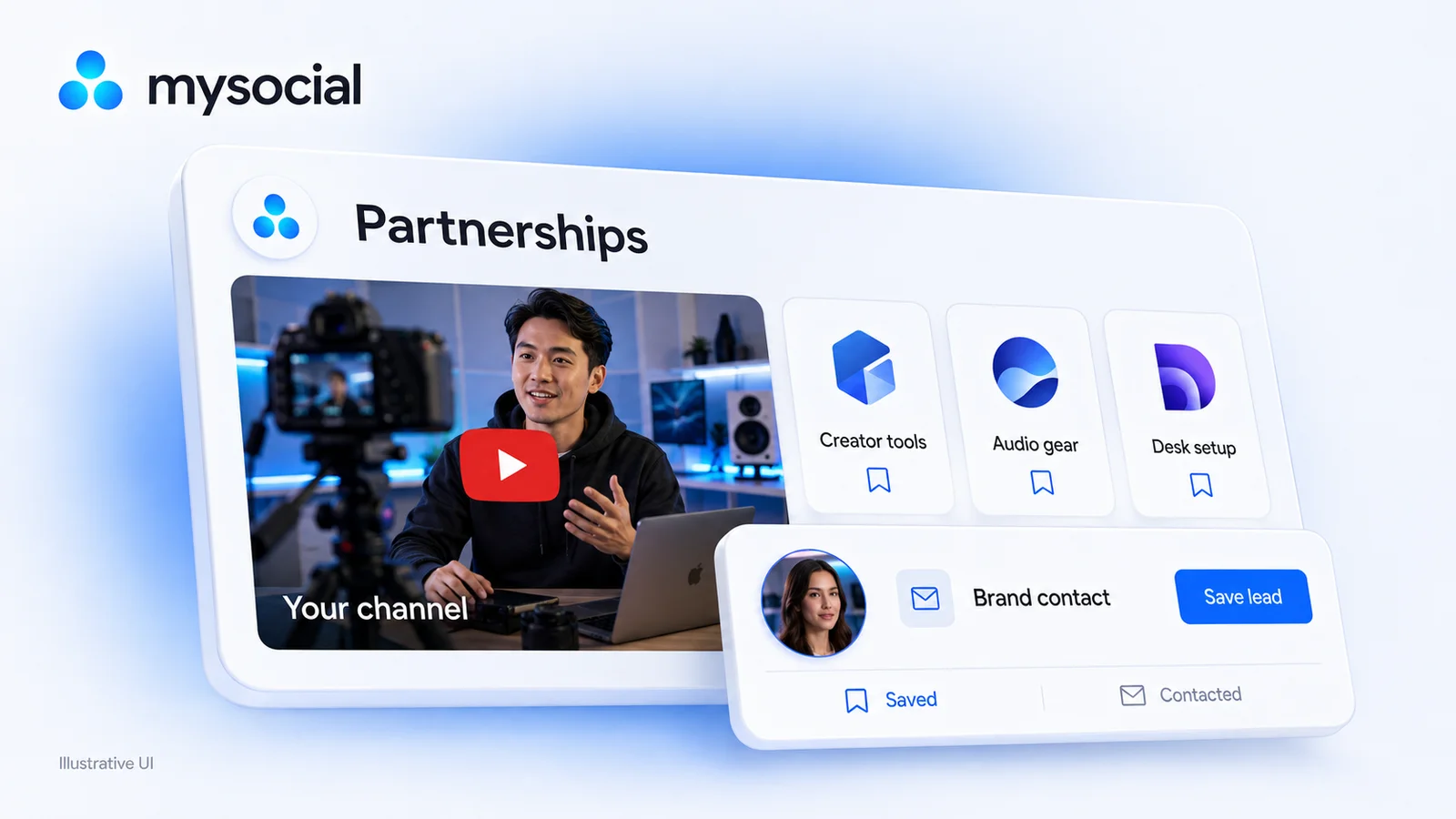
Mysocial can support the research and relationship-record part of this process. With a connected assistant, research companies in a niche and relevant roles, review available contact routes, then save the prospects you choose to pursue in Partnerships. Keep fit notes, pitch drafts and interactions with the selected lead so you can review what happened before planning the next step.
Research can return stored results and incomplete contact information. Check source dates and confidence labels; a remembered person or address is not proof that it is current, belongs to the right role or will reply. Finding a company does not establish an open campaign or budget. Saving a prospect records your choice; it does not contact the brand or close a deal.
Connect Mysocial to your assistant and check your workspace, plan and available allowance before fresh brand or contact research. A starting prompt is:
Check my active workspace and research access. I make YouTube tutorials about [topic] for [audience evidence]. Research up to five companies in [category/market] and show why each is worth reviewing, with source dates and missing information. Distinguish company fit from confirmed sponsorship activity. Ask before deeper research, contact enrichment or saving prospects. Do not send messages.The assistant can help prepare a draft from the evidence and context you provide. You review it and send it through your own chosen channel, then record the interaction. Available research consumes your allowance; historical records and a draft are not guaranteed contacts or deals. There is no fixed-size verified sponsor database or budget filter promised here.
Record the accepted deliverables, timing, payment terms and permissions before production. Do not treat a public mention, a free product or a requested ad account connection as permission for every possible use of your content.
YouTube’s branded-content guidance says to declare commercial relationships using the paid-promotion setting and follow applicable legal requirements. That platform label does not settle every disclosure obligation. Check the rules relevant to your campaign and audience.
After publication, report the agreed evidence at the agreed date: the video URL, observed views, available link results and any approved reporting context. Explain what you cannot measure. Views or attributed purchases alone do not prove incremental sales or ROI. A successful collaboration can justify discussing another brief, but renewal and ongoing revenue remain decisions both parties must make.
Choose one relevant brand, prepare the evidence packet and review a specific invitation today. For broader options beyond sponsorship, explore the Creator Monetization & Brand Deals hub.
For YouTube creators
Research brands that fit your work, review available contact routes and keep the prospect, pitch draft and next step together in Partnerships.
Brand and contact research require paid research access and available allowance. You review and send every message yourself.
Creator Monetization & Brand Deals
Related Posts
Compare YouTube sponsorship platforms for finding brands and getting booked. See costs, eligibility and the best fit for your channel.
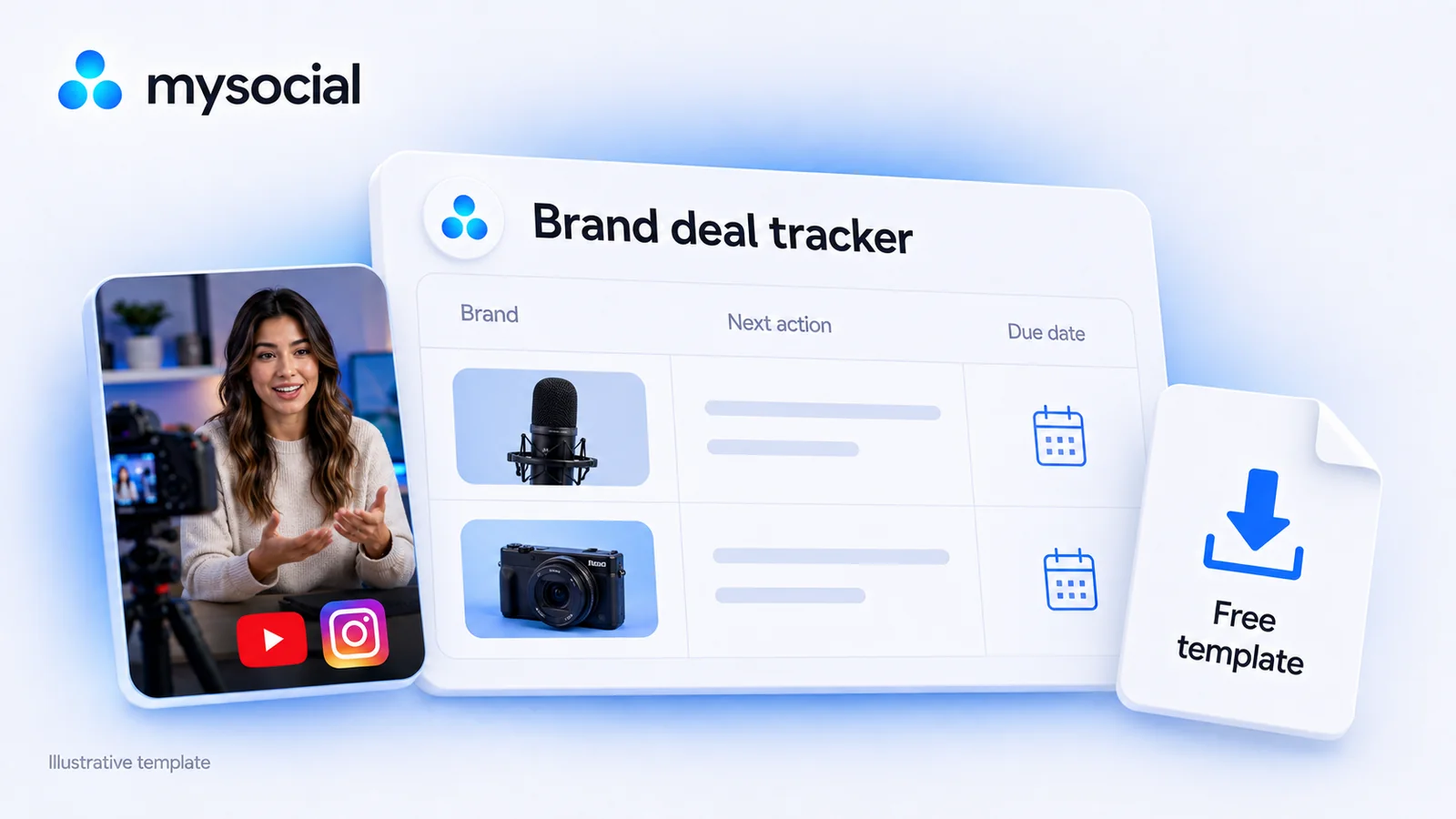
Download a free brand deal tracker for YouTube and Instagram. Includes 100 prepared rows, a filled example, follow-up checks, delivery dates and payment balances.

Calculate earned media value with a clear formula and worked example. Choose defensible CPM inputs and report campaign outcomes alongside EMV.