
Earned Media Value: Formula, Example & Limits
Calculate earned media value with a clear formula and worked example. Choose defensible CPM inputs and report campaign outcomes alongside EMV.

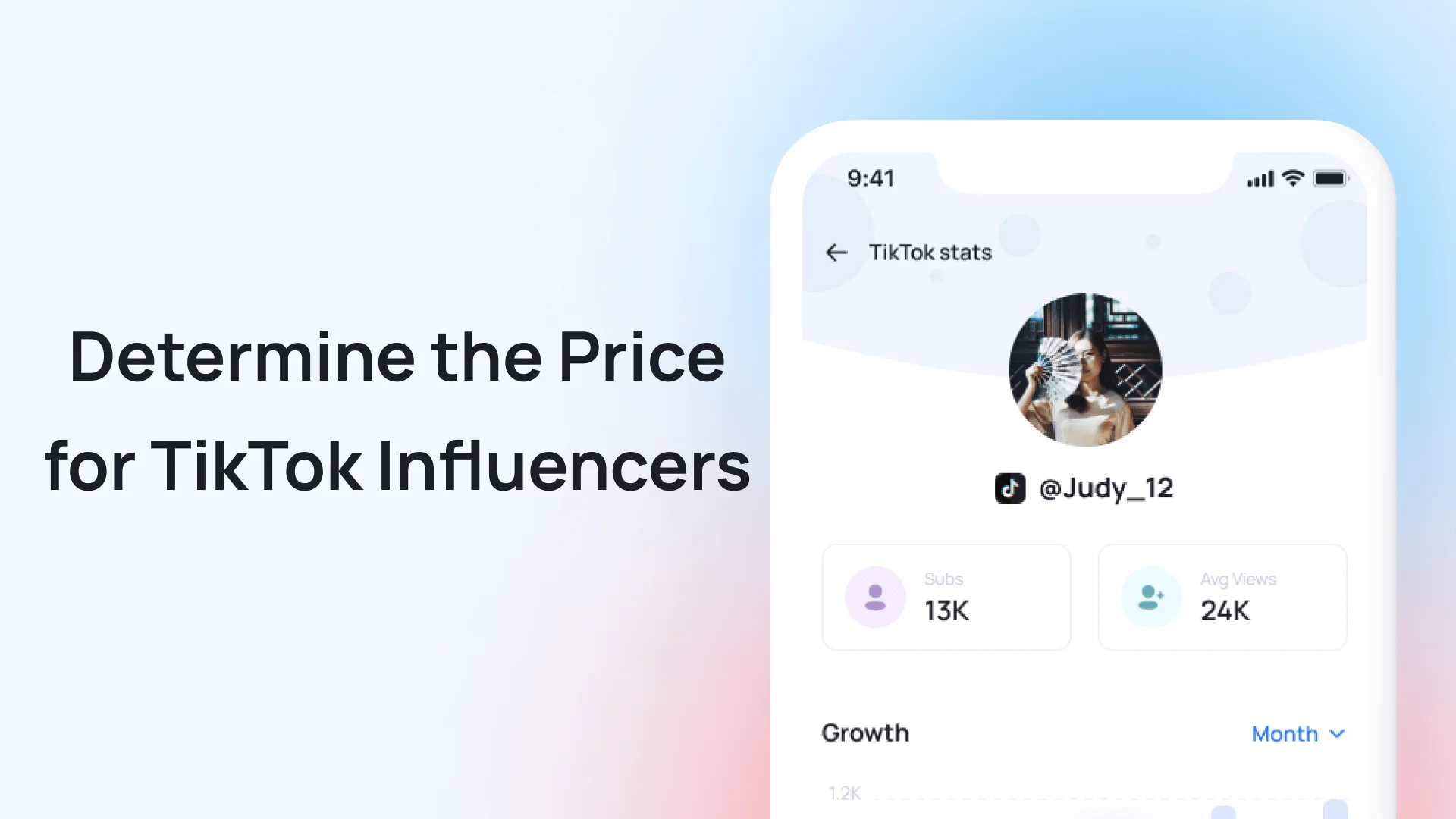
Quick answers
On Collabstr’s self-serve marketplace, the average paid TikTok collaboration was $186 in 2025, and 80% of all its collaborations cost under $300. Published guides price a video from a 1,000–10,000 follower creator at $10–$200, and above a million followers at over $500 to $50,000 or more.
Start from your average views on recent comparable posts, then price the work and the rights. Fee equals expected views divided by 1,000, multiplied by a CPM you can justify from past deals. Quote Spark Ads authorization, other usage and exclusivity as separate lines.
Divide the quoted fee by the creator’s expected views and multiply by 1,000 to get the cost per 1,000 views. Compare creators only when the deliverables, revisions, Spark Ads days and usage match. A lower CPM is not a better deal if the audience does not fit.
Price them as a separate line. Creators authorize a post for 7, 30, 60 or 365 days, and tagging a brand partner can grant a 60-day authorization by default. We found no disclosed dataset of Spark Ads fees, so ask each creator to quote the exact duration you need.
On Collabstr’s marketplace in 2025, the average paid collaboration was $186 on TikTok, $193 on Instagram and $255 on YouTube. Those averages mostly reflect small packages on one marketplace, not the price of your brief. Compare creators by cost per 1,000 expected views instead.
TikTok influencer rates depend on the views a post can expect and the rights a brand wants, not on followers alone. On Collabstr’s self-serve marketplace, the average paid TikTok collaboration in 2025 was $186. Published follower-tier guides disagree by four to ten times for similar tiers, and neither shows the deals behind its numbers.
This guide is for brands budgeting for TikTok creators, and for creators asking how much to charge for a TikTok post. Every figure names its source and date. The worked examples use invented prices.
Jump to the TikTok sponsorship calculator, the creator pricing steps or the worked quote comparison.
The one source we found that publishes TikTok prices with its population disclosed is Collabstr’s annual report on its own marketplace. The 2026 edition covers 2025 activity: more than 472,000 packages and 21,000 collaborations across all platforms.
| Measure | Figure | Source and date | What it covers |
|---|---|---|---|
| Average paid TikTok collaboration | $186 | Collabstr 2026 report, 2025 activity | Completed deals on a self-serve marketplace; 80% of all its collaborations cost under $300 |
| Average TikTok package asking price | $182 | Same report | Listed offers, not completed deals |
| TikTok’s share of campaigns | 21%, down from 41% | Same report | Share of all Collabstr engagements in 2025 against the year before |
| Average paid collaboration elsewhere | Instagram $193; YouTube $255 | Same report | The same marketplace and year |
The report says custom engagements and negotiation can make paid prices differ from asking prices. Our reading: these averages describe many small packages on one marketplace. Treat them as context for smaller creators, not as the price of a creator with a large, steady audience.
Rate guides publish tiers by follower count. Two current examples, Collabstr’s TikTok pricing guide (updated December 12, 2025) and Influencer Marketing Hub’s TikTok rates guide (updated August 31, 2026), disagree by four to ten times for similar tiers. Neither names the deals or survey behind its ranges.
| Tier | Collabstr (Dec 2025) | Influencer Marketing Hub (Aug 2026) |
|---|---|---|
| Nano | 1K–10K: $10–$50 per video | 1K–10K: about $50–$200 per post or video |
| Micro | 10K–50K: $50–$150 per post | 10K–100K: about $200–$800 |
| Macro | 50K–1M: $150–$500 per video | 100K–1M: about $800–$5,000 |
| Mega | 1M+: can exceed $500, often into the thousands | 1M+: about $5,000–$50,000+ |
| Stated basis | Not stated | Not stated beyond “data-informed” |
Our reading: the gap likely reflects different markets and deliverables. A self-serve marketplace lists many small packages, while broader guides describe bigger campaigns. Neither table tells you what a specific creator’s next post is worth.
Followers still matter for income. In CreatorIQ and Influencers.club’s survey of 5,095 creators (May 29 to June 29, 2026), follower and subscriber counts had the strongest relationship with creator income on TikTok, Instagram and YouTube. That is why rate cards start from followers. For a single post, expected views are the better input.
Send every creator the same scope before comparing prices. Ask for each line below as its own quote, so you can remove one without renegotiating the rest.
| Format or right | Specify in the brief | Ask the creator to quote |
|---|---|---|
| In-feed video | Length, concept, posting window, link or code, revisions | Creation and posting |
| Series of videos | Number of posts and cadence | The package and the price per video |
| LIVE mention | Duration, timing and what is shown | Its own price |
| Spark Ads authorization | 7, 30, 60 or 365 days, the durations TikTok Ads Manager offers | A separate line for the duration you need |
| Brand partner tag | Whether the default 60-day ads authorization is part of the deal | Confirm it in writing |
| Use beyond TikTok | Where the brand will reuse the video, and for how long | A separate license |
| Exclusivity | Named competitors and number of days | A separate line |
TikTok requires creators to turn on its content disclosure setting when they promote a brand. A branded post is labeled Paid partnership, and TikTok says the setting does not affect distribution in feeds. Tagging the brand as a partner can also grant ads authorization, 60 days by default, so agree whether that is part of the fee.
Enter a creator’s expected views and a CPM range to estimate a base fee, or add a quote to see what it costs per 1,000 expected views. The calculator starts empty because we found no published TikTok CPM range backed by disclosed deal data.
Estimate a fee or check a quote
Enter expected views, then a CPM range, a quoted fee or both.
Free and local: this calculator sends nothing to a server and saves nothing between visits. Amounts are in US dollars.
This is arithmetic on your inputs, not a quote or a market rate. It covers a base fee only: price paid-ad use, exclusivity, extra deliverables and revisions separately, and add any taxes or fees that apply. Views are an estimate, not a guarantee.
Charge for the views your post can expect, the work it takes and the rights the brand wants. Your follower count sets expectations, but a brand comparing quotes will divide your fee by your views.
Illustrative example: a creator averages 25,000 views on comparable posts, and past deals worked out to $12–$20 per 1,000 views. The base fee range is 25,000 ÷ 1,000 × $12 = $300 to 25,000 ÷ 1,000 × $20 = $500. A 30-day Spark Ads authorization and any reuse outside TikTok go on their own lines. These numbers are invented.
Our guide on how much to charge for a brand deal covers packaging and negotiation. A Media Kit lets you share channel stats and selected work beside the quote, and how to monetize TikTok covers income beyond brand deals.
Illustrative example only: a fictional brand wants one 30–45 second in-feed video with a link in bio, one revision and a 30-day Spark Ads authorization. The prices and view counts are invented to show the method.
| Cost item, USD | Creator A | Creator B |
|---|---|---|
| In-feed video | $400 | $700 |
| 30-day Spark Ads authorization | $150 | Included |
| Comparable creator fee | $550 | $700 |
| Expected views (average of 10 recent comparable posts) | 20,000 | 70,000 |
| Fee per 1,000 expected views | $27.50 | $10.00 |
Creator A’s headline quote was lower: $400 against $700. With the same 30-day authorization, A costs $27.50 per 1,000 expected views and B costs $10.00. If B’s post reaches 35,000 views instead, the observed figure doubles to $20.00.
Spark Ads spend is a separate advertising budget: the authorization fee buys the right to run the post, not any impressions. Track each creator with a tagged link, and remember that cost per view says nothing yet about sales or profit.
For red flags in follower and view patterns, see how to spot fake influencer profiles. Weighing platforms? Read TikTok versus Instagram for influencer marketing.
A fair price only matters for the right creator. For brands and agencies: connect Mysocial to Claude or ChatGPT and ask for TikTok creators who publish about your campaign topic. Mysocial searches what creators publish, then returns the creators behind the best-performing posts, with follower counts and the views their matching posts earned.
Save the creators worth a quote to Mysocial Partnerships with your fit notes and source posts. Then send each one the same brief and compare the replies with the calculator above. Search results are not quotes and do not verify demographics, so ask every creator for both.
Build your creator shortlist and keep the research with each relationship. Creator search needs a Mysocial plan with research access and uses its monthly allowance; your AI needs a Mysocial connection.
Start a creator shortlist Open PartnershipsSee Influencer Discovery for how the search works. Comparing platforms? The cross-platform pricing guide puts TikTok beside YouTube and Instagram, and the YouTube and Instagram rate guides use the same sourced approach.
For brands and agencies
Search TikTok creators by the topics they publish about, review their source posts, and keep your shortlist and fit notes in Mysocial Partnerships.
Your AI needs a Mysocial connection. Creator search needs a plan with research access and uses its monthly allowance.
Creator Monetization & Brand Deals
Related Posts
Calculate earned media value with a clear formula and worked example. Choose defensible CPM inputs and report campaign outcomes alongside EMV.
Find small influencers for your brand. Compare audience fit, recent reach, engagement quality and campaign costs before choosing nano or micro-creators.
Plan esports sponsorship with an inventory worksheet, permission checks and a worked activation example. Research suitable brands before pitching.