Social Media Statistics 2026: Users & Engagement
The ultimate social media stats for 2026 -- user counts, engagement rates, demographics, and revenue data across all major platforms.

Quick answers
Neither alone — the hybrid approach wins. Organic content generates leads at 61% lower cost than paid ads, but takes 3-6 months to compound. Paid ads deliver immediate reach but stop the moment you stop paying. LinkedIn research shows prospects exposed to both organic and paid content are 61% more likely to convert. The recommended split is 40-50% budget on content creation, 25-35% on paid ads, and the rest on tools and team.
Small businesses typically spend $650-2,500/month on paid social ads. The average return is $5.28 for every $1 spent. Allocate 15-25% of your total marketing budget to social media, with 25-35% of that going to paid advertising. Start with $500/month on your best-performing platform, test for 30 days, then scale what works.
Organic reach continues to decline across platforms. Facebook page posts reach roughly 2-5% of followers. Instagram feed posts are also losing organic distribution. TikTok remains the strongest platform for organic reach thanks to its interest-based algorithm. Carousels and Reels consistently outperform static posts for organic engagement on Instagram and Facebook.
Every dollar you spend on social media either compounds or evaporates. Organic content compounds — a single well-optimized post can generate leads for years. Paid ads evaporate — the traffic stops the moment you stop paying.
But here is the reality most guides skip: organic reach is declining on every major platform, and paid ads alone are getting more expensive. The answer is not picking one. It is building a hybrid strategy where organic content lowers your cost per lead while paid ads accelerate the timeline.
Here are the actual numbers, and a framework to allocate your budget based on real 2026 benchmarks.
61%
Lower cost per lead from organic vs. paid (MarketerMedia, 2025)
$5.28
Average return per $1 spent on social ads (Madgicx, 2026)
3×
More leads from content marketing vs. paid search (WifiTalents, 2026)
61%
Higher conversion when prospects see both organic + paid (LinkedIn, 2026)
The debate is not organic or paid — it is understanding what each channel is good at, what it costs, and when to use it. Here is the honest comparison.
Sources: WifiTalents Content Marketing ROI 2026, Madgicx Social Media Advertising Cost 2026, NealSchaffer Organic Social Media Strategy 2026
Before you allocate a single dollar to paid ads, you need to know what each platform actually costs. These benchmarks help you pick the platform that matches your budget and audience.
$0.50–$2
Average CPC
$0.50–$2
Average CPC
$3.50–$12
Average CPM
$5–$12
Average CPC
Sources: Madgicx Social Media Advertising Cost 2026, WordStream Facebook Ads Benchmarks 2025, PPC Chief Average CPC 2026
Organic reach is declining — 64% of marketers are reducing organic spend as platforms become interest-based media engines (SocioLabs, 2026). But that does not mean organic is dead. It means only the right organic strategies survive.
Carousels and Reels consistently outperform static posts for organic reach on Instagram and Facebook (Hootsuite, 2026). Prioritize these formats — especially educational carousels that get saved and shared.
UGC drives 28% higher engagement than brand-created content (NealSchaffer, 2026). Encourage customers to tag you, reshare their stories, and build a UGC pipeline that feeds your content calendar.
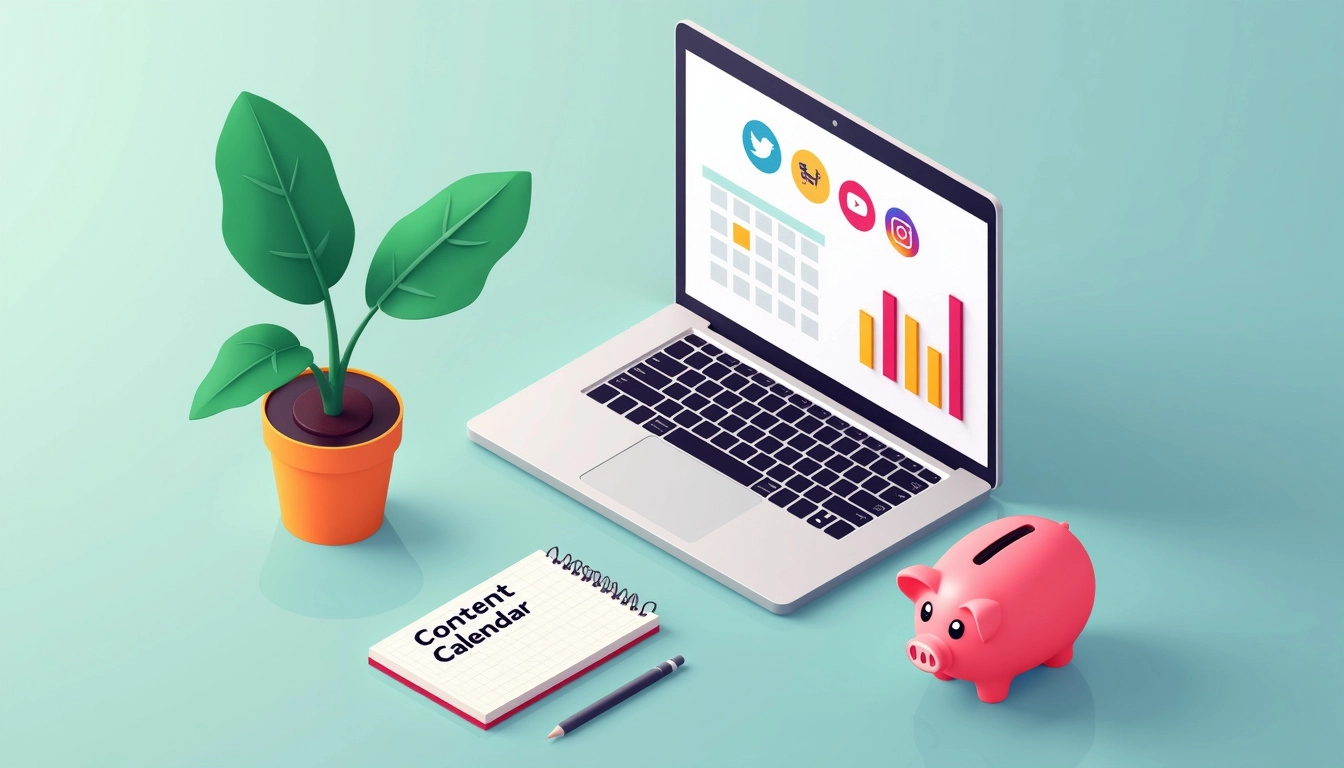
Algorithms reward consistency. Build a content calendar with 3-5 weekly posts and stick to it. Sporadic posting tells the algorithm your content is not worth distributing.
Reply to every comment in the first 30-60 minutes after posting. Algorithmic boost is highest when the platform detects active conversation. Replies count as engagement signals.
TikTok’s interest-based algorithm still surfaces content based on engagement signals, not follower count (TechJuice, 2026). Even small accounts can go viral. Use TikTok as your top-of-funnel discovery engine, then funnel audiences to Instagram or email.
Small businesses typically spend $650–$2,500/month on social media ads (Madgicx, 2026). The key is not spending more — it is spending smarter. Here is how to get the most from a limited paid budget.
Step 01
Pick the platform where your audience is most active and where your organic content already performs. If your Reels get saves and shares, start with Instagram ads. If your carousels drive comments, try Facebook. Split-testing across 4 platforms on a $1,000/month budget dilutes everything.
Rule of thumb: $500/month minimum per platform to get statistically meaningful data within 30 days.
Step 02
The cheapest paid strategy is boosting content that already proved itself organically. If a post got 3-5× your average engagement, it will likely perform well as a paid ad too — the algorithm already validated it.
• Set a modest boost budget ($20-50 per post)
• Target a lookalike audience based on your existing followers
• Run for 3-7 days, then evaluate
Step 03
Retargeting ads (showing ads to people who already visited your site) have the lowest CPC and highest conversion rates of any paid tactic. Install your Meta Pixel and TikTok Pixel on day one.
• Custom audience: Website visitors from the last 30-90 days
• Lookalike audience: People similar to your existing customers
• Typical CPC: 50-70% lower than cold targeting
Step 04
Most small businesses waste ad budget by changing everything at once — headline, image, audience, and CTA simultaneously. Test one variable per week:
• Week 1: Test 2 different headlines, same image
• Week 2: Test 2 images, winning headline
• Week 3: Test 2 audiences, winning creative
• Week 4: Scale the winning combination
Step 05
For every campaign, define upfront what 'not working' looks like. If a campaign spends 2× your target cost-per-lead without converting, pause it — don't hope it improves.
• Awareness campaigns: Kill if CPM exceeds 2× platform average
• Traffic campaigns: Kill if CPC exceeds 3× your benchmark
• Conversion campaigns: Kill if no conversions after spending 3× your target CPL
The smartest strategy is not choosing organic or paid — it is building a system where organic content feeds paid campaigns and paid campaigns amplify organic wins. Here is how to allocate your budget based on 2026 benchmarks.
Recommended Social Media Budget Allocation
% of social media budget
0% to 50%
Budget category
Content creation
45%Paid advertising
30%Tools & analytics
15%Team & ops
10%Source: SocialRails Social Media Budgeting Guide, 2026
Post 3-5× per week. Use a mix of Reels, carousels, and Stories. Track which formats get the most saves, shares, and comments.
Cost: Time onlyTake your top 10% organic content and put paid budget behind it. You already know it resonates — now scale the reach with $20-100 per post.
Cost: $20-100/postRetarget people who engaged with boosted posts or visited your site. This is where your lowest CPC and highest conversion rates live.
Cost: 50-70% lower CPCThe flywheel effect: organic insights improve paid targeting → paid reach grows organic followers → larger audience produces more organic winners → repeat
Not every business has the same budget. Here is how to allocate based on where you are right now. For detailed pricing benchmarks, see our social media management pricing guide.
$0–$500
per month
$500–$2,500
per month
$2,500+
per month
Benchmarks based on SocialRails 2026 and Madgicx 2026 budget guides. Small businesses typically start at $650-2,500/mo.
The worst mistake is tracking vanity metrics (follower count, likes) and ignoring revenue metrics. Here is what to measure for each channel.
Follower count — 10K disengaged followers are worth less than 1K active ones
Like count — likes don't correlate with conversions or revenue
Post frequency for its own sake — 3 great posts beat 7 mediocre ones
Impressions without context — reaching 100K people who don't convert is expensive wallpaper
Competitor follower comparisons — their audience size says nothing about their revenue
Cost per lead (CPL) — the real cost to acquire each potential customer from organic and paid
Engagement rate — comments, saves, and shares matter more than likes
Click-through rate (CTR) — percentage of people who click through to your site or landing page
Return on ad spend (ROAS) — revenue generated per dollar spent on ads
Content half-life — how long each post continues generating engagement after publishing
If you are starting from zero or resetting your strategy, here is a month-by-month ramp-up that balances organic foundation-building with smart paid amplification. Use our social media content creation guide to build your content pipeline alongside this plan.
Audit your existing accounts. Identify your top 5 performing posts from the last 90 days. Set up Meta Pixel and TikTok Pixel. Choose 1-2 primary platforms. Define 3 content pillars (educate, entertain, convert).
Publish 4-5 organic posts. Mix Reels, carousels, and Stories. Reply to every comment within 60 minutes. Track saves, shares, and comment depth — these signal algorithmic value.
Boost your top 2 organic posts ($25-50 each). Set up one retargeting campaign for website visitors. A/B test two audience segments. Keep organic posting cadence at 4-5× per week.
Review all metrics: CPL, CTR, engagement rate, ROAS. Kill underperforming ads. Double budget on winners. Refine your content pillars based on what the data says. Set your Month 2 budget.
Mysocial's analytics dashboard combines organic reach, engagement, and paid performance across Instagram, TikTok, YouTube, and more — so you can make budget decisions based on real data.
Try freeSocial Media Growth & Algorithms
Related Posts
The ultimate social media stats for 2026 -- user counts, engagement rates, demographics, and revenue data across all major platforms.
Platform demographics shift constantly. Here is where each generation spends time online and how creators can follow their audience to the right platform.

Your Instagram bio link loses followers to in-app browsers. Fix it with deep linking to boost conversions and keep traffic in-app.