30-Day Content Plan for YouTube, Instagram, and TikTok
A step-by-step 30-day content plan to post consistently on YouTube, Instagram, and TikTok without burning out.

Quick answers
Yes. Tools like Midjourney, DALL-E 3, and MySocial AI Content Studio generate photorealistic clothing mockups from text descriptions. The quality is high enough for mood boards, social media, and pitch decks.
Be specific about the garment type, material, color, fit, background, and style reference. Adding a designer name or mood descriptor helps the AI match a specific aesthetic instead of generating generic results.
Dramatically. A traditional photoshoot takes hours to days. AI generates dozens of variations in minutes. You can iterate on colors, materials, and styles without rebooking a photographer.
Midjourney excels at photorealistic fashion imagery. DALL-E 3 (via ChatGPT) is great for quick iterations. MySocial AI Content Studio works well for creators who need mockups alongside their social content workflow.
Traditional clothing mockups require photographers, models, studio time, and weeks of back-and-forth. AI image generation collapses that entire process into minutes. You describe what you want, the AI generates it, and you iterate until it’s right.
Whether you’re a fashion creator building a brand, a designer pitching concepts, or an influencer creating content faster, AI mockups give you studio-quality visuals without the studio.
10x
Faster than traditional photoshoots
50+
Variations per session
$0
Studio and model costs
The speed advantage is obvious, but the real value is iteration. With a traditional shoot, you get what you get. With AI, you can generate 50 variations of the same jacket in different colors, fabrics, and settings — then pick the best three.
This changes the workflow for:
The quality of your mockup depends entirely on your prompt. Vague descriptions produce generic results. Specific, structured prompts produce images you’d actually use.
Step 01
Be explicit: 'Women's mid-length down jacket, fitted at the waist' beats 'a jacket.' Include silhouette, length, and fit details.
Step 02
Don't say 'blue shirt.' Say 'White hoodie with black stripes on the sleeves, heavyweight cotton.' Exact color + material = predictable output.
Step 03
Add 'clean white background, natural light' for product-style shots. Or 'urban street setting, golden hour' for lifestyle imagery. Background is part of the design narrative.
Step 04
Adding 'designed by Gucci' vs 'designed by Prada' to the same prompt produces completely different results. The AI understands brand aesthetics and applies them to your garment.
Step 05
Phrases like 'simple and clean,' 'majestic feel,' or 'streetwear energy' guide the AI's creative direction beyond just the physical garment.
Here’s what well-structured prompts actually produce:
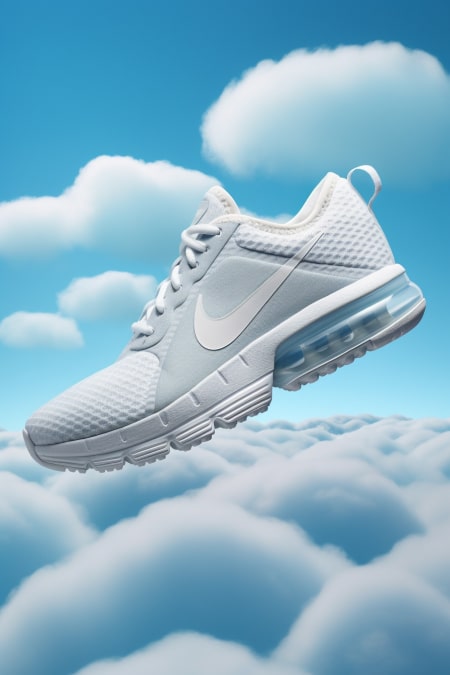
Prompt
”Nike Air Shoe sneaker with a texture that simulates soft white clouds”
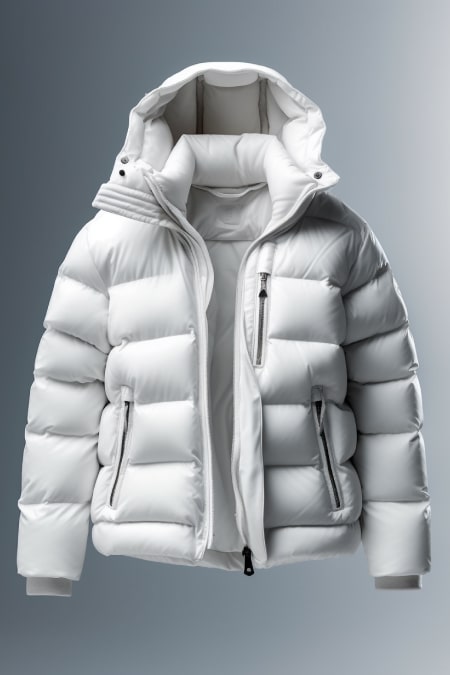
Prompt
”Women’s mid down jacket, clean color, fit size, waistline inside, clean white background, natural light”
Notice how the second prompt specifies fit (“waistline inside”), background (“clean white”), and lighting (“natural light”). These details are what make the output usable — not just interesting.
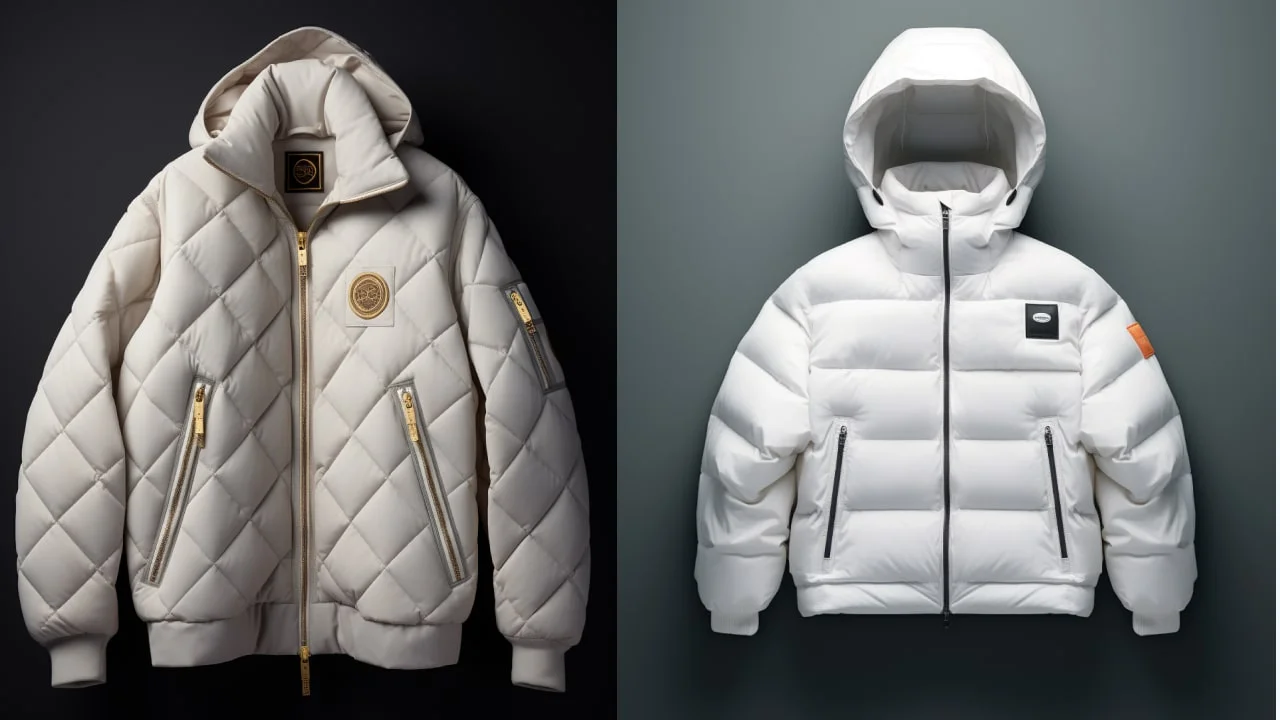
Adding a designer reference to the same base prompt produces dramatically different aesthetics:
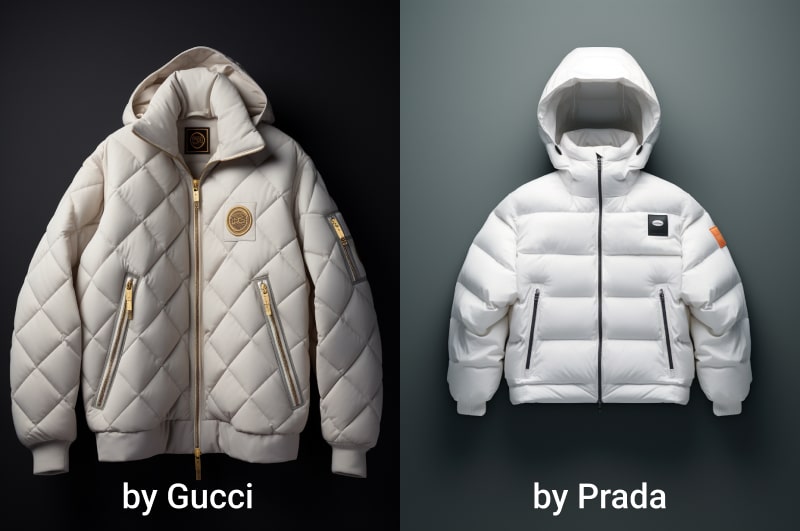
The base prompt was identical — “White puffer jacket” — with only the designer name changed. This technique is one of the fastest ways to explore different visual directions without rewriting your entire prompt.
Stack references. Combine a designer with a material and a mood: “Balenciaga oversized hoodie, brushed fleece, muted earth tones, editorial lighting.”
Use negative prompts. Specify what you don’t want: “no text, no logos, no people” keeps the focus on the garment itself.
Specify the camera angle. “Flat lay on marble surface” vs “worn by model, full body shot, studio backdrop” produces completely different compositions.
Iterate in batches. Generate 4-8 variations, pick the closest one, then refine that specific prompt. Treat it like a conversation, not a one-shot request.
Match aspect ratio to use case. Square for Instagram feed, 9:16 for Stories/TikTok, 16:9 for website banners. Set this before generating.
Save your best prompts. Build a prompt library organized by garment type. Your best outputs become templates for future collections.
Recommended AI tools
Midjourney
Best photorealism. Excels at textures, fabrics, and lighting. The go-to for production-quality fashion mockups.
ChatGPT + DALL-E
Fastest iteration. Describe, refine, regenerate — all in one conversation. Great for rapid exploration of ideas.
MySocial AI Studio
Built for creators. Generate mockups alongside your social content workflow — no switching between tools.
The best tool depends on your workflow. If you need maximum quality for a lookbook, use Midjourney. If you need fast iteration during a brainstorm, use ChatGPT. If you’re a creator who also needs to plan and schedule content, MySocial keeps everything in one place.
Pair your AI mockups with strong social media content strategy and you can build a fashion brand presence without a production budget.
MySocial's AI Content Studio helps creators produce visuals, captions, and content plans — all from one dashboard. Start creating.
Try AI Content StudioAI & Content Creation Workflows
Related Posts
A step-by-step 30-day content plan to post consistently on YouTube, Instagram, and TikTok without burning out.
Learn how to use AI tools to generate captions, scripts, hooks, and weekly content plans without sacrificing your voice. A practical workflow for creators.
Master video engagement. Hook psychology, retention editing, audio fundamentals, and techniques that separate watched videos from scrolled-past.