
3 Tips for Managing Influencer Relationships
How to manage influencer relationships that drive results -- from creative briefs to communication plans that prevent campaign disasters.

Quick answers
Check for these red flags: staircase-pattern follower growth (sudden jumps with no viral content), abnormally low engagement rate relative to follower count, generic one-word or emoji-only comments, followers with no profile pictures or posts, and an engagement rate that spikes only on sponsored content. Use tools like HypeAuditor or Social Blade to verify.
26% of Instagram accounts show signs of artificial followers, and up to 55% of influencers have engaged in some form of follower fraud. On average, 15% of an influencer account's followers are fake or inactive bots. Brands lose an estimated $1.3 billion annually to influencer fraud.
HypeAuditor uses AI to detect fake followers with 95.5% accuracy across 53+ behavioral patterns. Social Blade provides free follower growth history to spot staircase patterns. MySocial provides verified creator analytics through auto-updating media kits that brands can trust over unverified screenshots.
An engagement pod is a coordinated group of accounts that artificially like and comment on each other's posts to boost engagement metrics. They increased 65% year-over-year. Signs: the same accounts commenting on every post, generic praise comments from mid-sized accounts, engagement spikes within minutes of posting that then flatline.
Influencer fraud is a $1.3 billion problem — and it is getting harder to detect. Gone are the days when fake followers were obviously empty accounts with no profile pictures. In 2026, fraud looks like AI-generated profiles with realistic photos, engagement pods that coordinate human-like comments, and “growth management” services that drip fake followers slowly to avoid detection.
26% of Instagram accounts show signs of artificial followers. Up to 55% of influencers have engaged in some form of follower fraud (Outfame, 2026). 39% of brands reported experiencing fraud in their campaigns in 2025 (InfluenceFlow). Every dollar you spend on a fake influencer is not just wasted — it corrupts your campaign data and leads to bad strategic decisions.
This guide teaches you to spot every type of fraud before you spend a single dollar.
$1.3B
Lost to influencer fraud annually
26%
Of Instagram accounts have artificial followers
65%
YoY increase in engagement pod activity
39%
Of brands experienced campaign fraud in 2025
Every fraud signal below can appear in isolation on a legitimate account. What makes an account suspicious is multiple red flags appearing together. One unusual spike might be a viral post. Three red flags together is fraud.
The Fraud Detection Checklist
🚩 1
Staircase Follower Growth
Sudden jumps of hundreds or thousands of followers with no viral content, followed by flat periods. Real growth looks like a curve, not a staircase.
🚩 2
Engagement-to-Follower Mismatch
200K followers but 50 comments per post is a massive red flag. Benchmark: 3-8% for nano, 2-5% for micro. Below 1% on any tier signals fraud.
🚩 3
Generic or Bot-Like Comments
”Nice!” ”🔥🔥🔥” “Love this!” from accounts with no profile photos, no posts, or suspicious follower/following ratios. Real comments reference the actual content.
🚩 4
Engagement Pod Patterns
Same 20-30 accounts commenting on every post. Engagement spikes within minutes of posting, then flatlines. Pod activity increased 65% YoY.
🚩 5
Ghost Followers
Click on 20 random followers. If most have no profile picture, no posts, follow 1,000+ accounts, or have usernames like “user7283947382” — those are purchased bots.
🚩 6
Inconsistent Content Quality
Low-quality content combined with high engagement makes no sense. If the content would not organically attract the followers claimed, the numbers are inflated.
🚩 7
Refuses to Share Analytics
Every major platform provides audience analytics. If a creator refuses to share a verified media kit or send screenshots instead of live data — walk away.
Fake followers used to be obvious — empty bot accounts with no photos. In 2026, fraud has evolved into a professionalized industry with sophisticated tactics that require equally sophisticated detection.
The Fraud Industry — What You’re Up Against
Bot Followers
Cost: $20 per 1,000 followers
Detection: Easiest to spot. No profile photos, no posts, generic usernames. Many tools catch these automatically.
Engagement Packages
Cost: $50 per 100 comments
Detection: Moderate. Look for generic comments, same accounts on every post, and engagement that spikes within minutes then flatlines.
Engagement Pods
Cost: Free (mutual agreement)
Detection: Hard. Real accounts with real followers coordinate to boost each other. Look for the same 20-30 commenters on every post across pod members.
AI-Generated Profiles
Cost: $200+/month services
Detection: Hardest. AI-generated photos, contextual comments, gradual follower drip. Requires tool-based detection (HypeAuditor analyzes 53+ signals).
Sources: InfluenceFlow 2026 Fraud Guide, HypeAuditor Fraud Detection Report
Theory is useful, but seeing real examples is what sharpens your eye. These are actual screenshots of fake influencer activity.
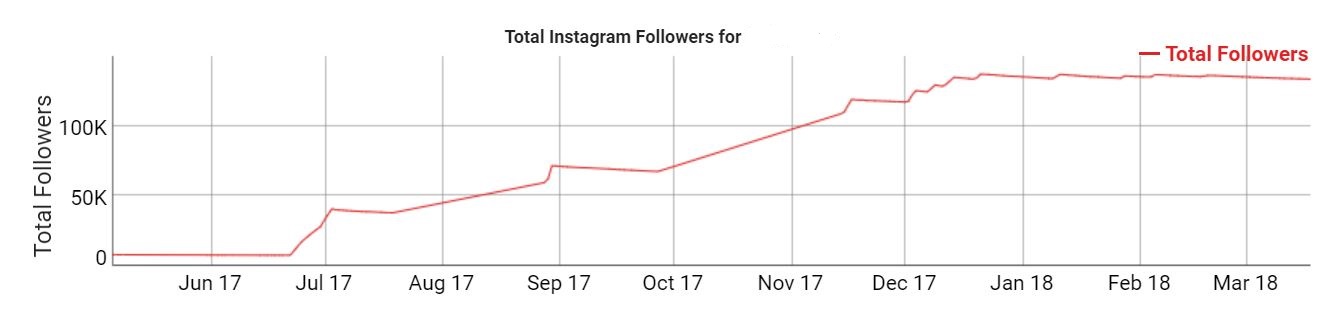
This Social Blade chart is a textbook example of purchased followers. Notice the flat periods interrupted by sudden vertical jumps — no legitimate viral content explains these spikes:
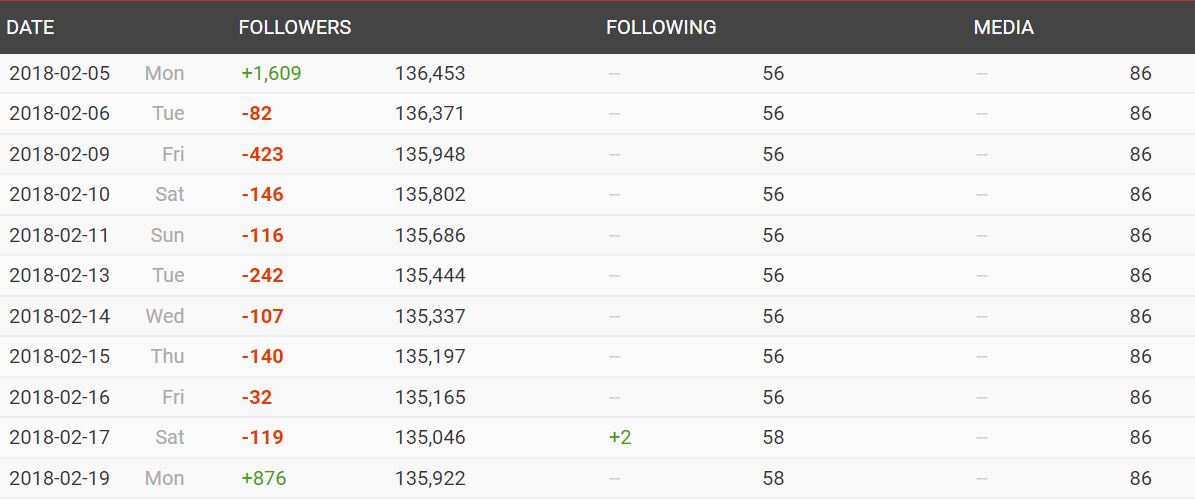
The daily breakdown makes it even clearer. On 2018-02-05, this account gained +1,609 followers in a single day. By the next day, it was already losing hundreds daily as the platform purged bots (-82, -423, -146, -116). Then on 2018-02-19, another purchase: +876. This cycle of buy-then-lose is unmistakable:
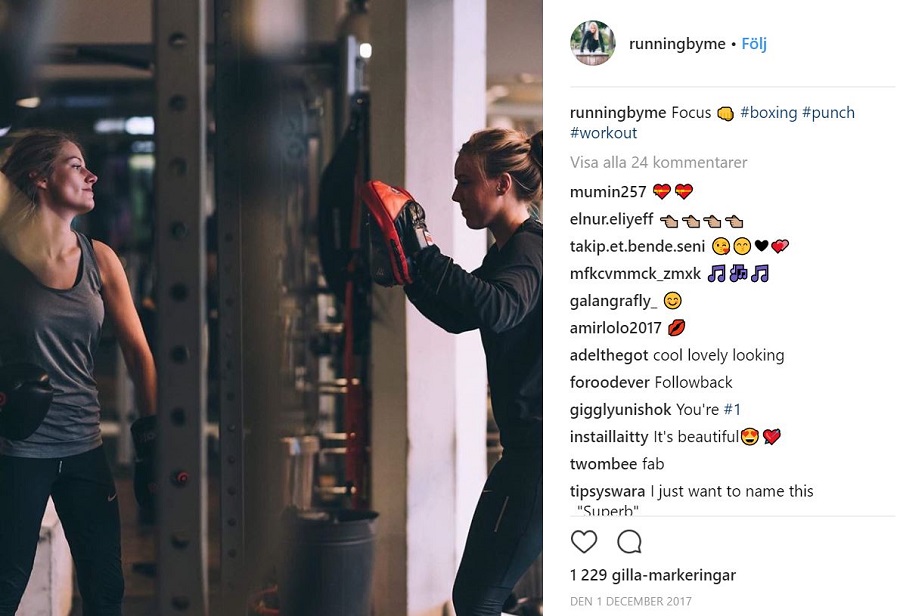
This Instagram post is from an account with nearly 22,000 followers but only 24 comments. Look at the comment quality — single emojis, one-word replies (“cool”, “fab”), random music notes, and “Followback” spam. No real conversation, no references to the actual content:
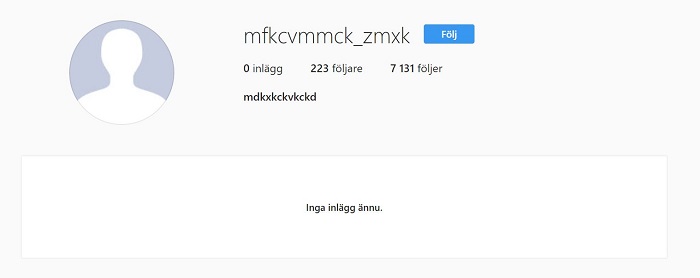
When we clicked on one of those commenters, this is what we found — the classic bot account. No profile picture, 0 posts, a gibberish username, and following 7,131 accounts. This is not a real person:
Never pay an influencer before running through these four verification steps. This process takes 15-20 minutes per creator and can save thousands in wasted spend.
Use Social Blade (free) to view 90 days of follower history.
• ✅ Healthy growth: Gradual upward curve, 5-15% monthly for established creators
• 🚩 Suspicious growth: Staircase pattern — flat periods interrupted by sudden jumps of hundreds or thousands (see the examples above)
• 🚩 Overnight spikes: 10,000+ new followers in a single day with no viral content to explain it
Key tip: Cross-reference spikes with their content. If a growth spike coincides with a genuinely viral post, it is legitimate. If there is no corresponding content — it is purchased.
Open the creator's 10 most recent posts and read the comments, don't just check the numbers.
• ✅ Real engagement: Multi-sentence replies, genuine questions, friends tagged, personal stories, debate
• 🚩 Fake engagement: Single-emoji comments, 'Nice post! 🔥' from faceless accounts, identical phrases repeated
• 🚩 Pod signals: Same 20-30 accounts commenting on every post, engagement that spikes within 5 minutes then flatlines
Saves and shares are the hardest metrics to fake. A creator with high save rates almost certainly has a real, engaged audience.
Click on 20-30 random followers and check their profiles.
• ✅ Real followers: Profile picture, 10+ posts of their own, normal follower/following ratio, bio with personal details
• 🚩 Bot followers: No profile picture, zero or 1-2 posts, following 2,000+ accounts, generic username (user38274923)
• 🚩 Ghost accounts: Haven't posted in 6+ months, following thousands, zero engagement on their own content
If more than 20-30% of random followers look fake, walk away. The average Instagram account has ~15% fake/inactive followers — anything significantly above that is a red flag.
Ask for a verified media kit with auto-updating data — never accept screenshots (they are trivially easy to edit).
• Audience demographics: Does the location, age, and gender match your target market?
• Engagement rate trend: Is it consistent or wildly fluctuating?
• Traffic sources: Where do their views/impressions come from? Organic discovery vs external traffic
If a creator refuses to share analytics, that is the biggest red flag of all. Every major platform provides audience insights natively. Use MySocial's verified reporting for data you can trust.
The damage from fake influencers goes far beyond wasted spend. It corrupts every downstream decision.
2x
Overpaid
Inflated CPM
If 50% of followers are fake, you paid double for half the real reach.
0%
Conversion
Bots Don’t Buy
Fake followers never convert. Zero clicks, zero sales, zero ROI from bot audiences.
📊
Corrupted
Bad Data
Fake engagement corrupts campaign analytics and leads to wrong strategic decisions on future campaigns.
💀
Reputation
Brand Risk
Associating your brand with a known fake influencer damages credibility if exposed publicly.
Knowing healthy engagement rates by tier is essential for detecting fraud. If an account’s engagement is significantly above or below these benchmarks, investigate further.
Healthy engagement rate benchmarks by tier
Engagement rate
Creator tier
Source: InfluenceFlow 2026 Benchmarks — 50,000+ campaigns analyzed
How to use this: A micro-influencer (10K-100K) claiming 8% engagement is either in a rare high-engagement niche or inflating their numbers. A macro creator (500K-1M) with 0.3% engagement likely has significant fake followers diluting their real audience. Cross-reference with comment quality — high engagement plus generic comments = pod or bot activity.
Manual checking catches obvious fraud, but sophisticated fakes require tool-based analysis. These tools analyze patterns across millions of data points that no human can check manually.
Request verified, auto-updating media kits from creators. Engagement rates, audience demographics, and growth data update in real time — no screenshots, no manipulation. The fastest way to verify a creator's claims.
AI-powered fraud detection with 95.5% accuracy across 53+ behavioral signals. Audience Quality Score (1-100), fake follower percentage, engagement authenticity checks, and growth anomaly detection. The industry standard for fraud analysis.
Free follower growth tracking for YouTube, Instagram, TikTok, and Twitch. View 90-day growth curves to spot staircase patterns and overnight spikes instantly. The best free tool for quick growth verification.
Verified creator analytics dashboard with real-time data you can trust for campaign decisions. Cross-reference engagement trends and audience demographics without relying on creator-provided screenshots.
Staircase growth pattern — flat periods interrupted by sudden jumps of 500-5,000 followers with no viral content
Generic one-word comments — 'Nice!' '🔥🔥🔥' 'Love this!' from accounts with no profile pictures or posts
Wildly inconsistent engagement — 8% on one post, 0.5% on the next, spikes only on sponsored content
Ghost followers — accounts following 2,000+ people, zero posts, generated usernames like user4827394
Refuses to share analytics or only sends screenshots — the single biggest red flag of all
Gradual, steady follower growth — a smooth upward curve that correlates with content publishing frequency
Multi-sentence comments that reference specific content — questions, personal stories, genuine debate
Consistent engagement rate across posts (within 1-2% variation) that matches their tier benchmark
Follower base with real profiles — profile pictures, posts, normal following ratios, personal bios
Willingness to share verified analytics — sends a live media kit without hesitation
MySocial gives brands verified media kits with auto-updating analytics — engagement rates, audience demographics, and growth data you can trust. No screenshots, no manipulation.
Get verified analyticsInfluencer Marketing Strategy
Related Posts
How to manage influencer relationships that drive results -- from creative briefs to communication plans that prevent campaign disasters.
Why brands are shifting budgets to influencer marketing -- and the 4 traditional marketing problems it solves better than ads.
Cross-platform influencer pricing comparison for 2026 — rates by tier, CPM benchmarks, format multipliers, and how to decide which platform gets your budget.